In honor of Black History Month, we’re spotlighting a Black pioneer whose brilliance continues to make life-saving work possible for Food Is Medicine Coalition (FIMC) agencies across the country, often without us even realizing it.
Frederick McKinley Jones, a prolific early 20th-century inventor, forever changed how the world protects and transports food. In the early 1940s, Jones invented the Thermo King, the first automatic refrigeration system for trucks. That single innovation revolutionized the refrigeration and grocery industries, allowing fresh and frozen foods to be safely transported over long distances. Before Jones’ invention, most perishable food could only be shipped as canned goods. After it, the food industry changed forever.
Today, Jones’ technology still powers refrigerated vans and trucks across the country, including those delivering millions of medically tailored meals to people living with serious illness. Home delivery is essential for this population who are often too sick to shop or cook for themselves. Further, clients are often immune compromised, making ensuring food safety a vital imperative.
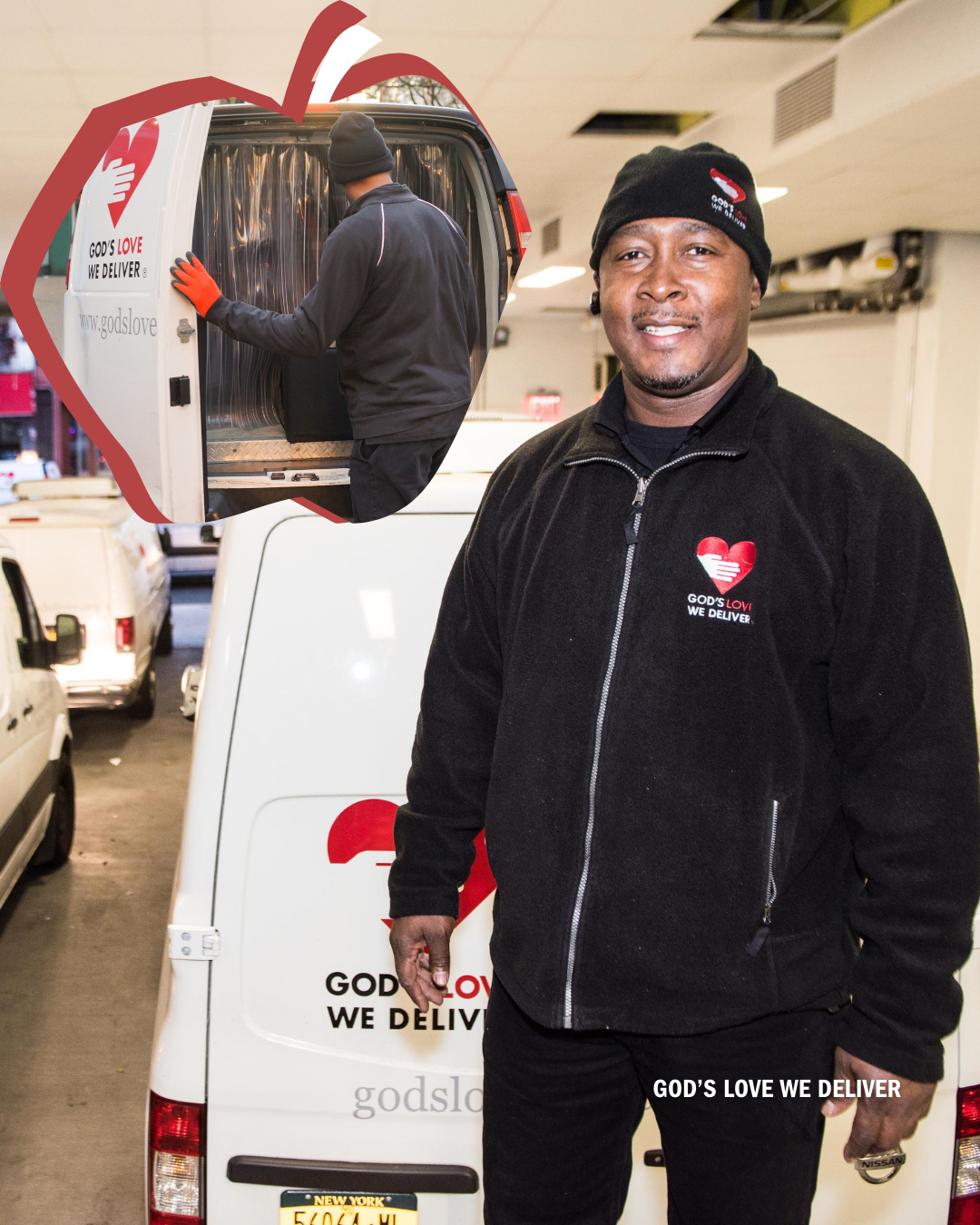
One of the people who sees that legacy in action every single day is Damone Jackson, Director of Distribution at God’s Love We Deliver. Damone has been with God’s Love for seven years, and his passion for the mission is unmistakable.
“This is the best place I’ve ever worked,” he says. “Every day is a brand-new day, and we’re all raring to go and get this food out.”
Recently promoted from Director of Delivery Operations to Director of Distribution, Damone now oversees both delivery operations and fulfillment across two facilities—a long-standing Manhattan site and a newly opened Brooklyn facility that officially launched in early 2026. Together, the facilities support a fleet of 31 refrigerated vehicles, running approximately 28 routes per day. Each van makes 40–45 stops and dealivers three meals a day for up to a week at a time.
And refrigeration isn’t optional.
“We can’t do anything non-refrigerated,” Damone explains. “Everything depends on that technology. We’re checking it constantly throughout the day to make sure food safety is never compromised.”
Damone’s days start early. Very early.
By 4:30 or 5:00 a.m., he and his delivery manager are already on site, ensuring routes are covered, paperwork aligns, vans are accounted for, and no meals are missing. Drivers begin arriving around 6:00 a.m., and from there, it’s all about execution—regardless of conditions.
Recently, those conditions included a historic blizzard dumping five to seven feet of snow, followed by sub-zero temperatures that turned streets into solid ice.
“It’s not snow anymore; it’s hard block ice,” Damone says. “But the food still has to go out.”
Moments like that underscore just how critical Frederick McKinley Jones’ invention remains.
“This is a human history situation,” Damone reflects. “It changed the course of civilization. How we survive depends on how we protect our food.”
Jones’ achievements were formally recognized decades later when he was posthumously awarded the National Medal of Technology, becoming the first Black inventor to ever receive that honor. But his true legacy lives on in places like God’s Love We Deliver and other FIMC agencies across the country, where refrigerated trucks don’t just transport food, they deliver health, dignity, and hope.
This Black History Month, we celebrate not only Frederick McKinley Jones’ groundbreaking innovation, but also leaders like Damone Jackson, who carry that legacy forward every morning before sunrise, ensuring that medically tailored meals reach the people who need them most.